Scholastic Book Orders

scholastic-book-clubs.jpg

About once a month, I will be sending home book order magazines from Scholastic's Reading Clubs. Reading Clubs are a great way to build a high-quality home library that is both interesting and relevant to students. While I highly recommend ordering from these catalogs, participation is completely optional. The main purpose of these book orders are to help your child better develop an appreciation for reading and to help them build fluency and accuracy. Additionally, since many parents have asked me what books would be appropriate for their child to read, Scholastic Book Orders make it easy to browse through many titles that would be a great choice for our grade level!

All book orders are placed online through a fast, easy, and secure process. No money/checks are sent to school. Use the information below to access the Scholastic Reading Clubs website.

Instructions:

  1. Visit the Scholastic Book Club.

  2. Sign-up for a username and password, using our unique Class Activation Code: HX7LG. This code ensures that your order is sent to our classroom. You will only have to enter the Class Activation Code once.

  3. Select the books you'd like to order from over 500 titles available, and take advantage of online-only specials and discounts.

  4. Submit your order online by the 17th of every month. I will submit any pending orders at the end of each month. Books will always be delivered directly to our classroom.

Our whole class benefits thanks to the free books we can earn with every online order. Thank you and happy reading!

Lexile Ranges and Library Books

Screen Shot 2020-10-13 at 10.08.27 AM.png

Students will be checking out books from the library on Thursdays . They are allowed two books at a time. We will be encouraging students to check out books at their reading level based on their Lexile range (provided in their Renaissance Learning reading assessment).

Most of the books have a colored sticker dot on the spine matching it to the colored chart above. Please encourage your child to read EVERY DAY in order to improve their reading fluency, accuracy, and comprehension.

Parents may also use the website Book Wizard to find books at their child’s Lexile reading level.

Growth Mindset vs. Fixed Mindset

Woodbury Elementary and IUSD is committed to teaching students to maintain a "growth mindset." What is a growth mindset? It means that someone believes they can learn or grow to be good at something or to get better at something through practice, repetition, and hard work. Someone who believes in having a fixed mindset believes that people are only born with as much ability or intelligence as they could possibly have, and that they cannot get better at something. 

In the classroom, we want the children to fail occasionally. Making mistakes is a natural and NECESSARY part of learning. As their teacher, I want my students to know that I make plenty of mistakes all the time-- but that's because we're all human. And it's okay to make mistakes as long as we learn from them! I maintain a growth mindset because I know that with dedicated time and effort, I can learn many new things and grow in many different abilities. The children should be encouraged to feel and believe that they can learn and grow too. They need to believe in a growth mindset. 

Tips for promoting a growth mindset in kids (adapted from Sarah McKay; yourbrainhealth.com):

  1. Help children understand that the brain works like a muscle. It can only grow through hard work, determination, and lots and lots of practice.

  2. Praise the process and not always the outcome. It's effort, hard work, and practice that allow children to achieve their true potential.

  3. Don't always focus on the outcome or results, whether it is good or bad.

  4. Embrace failures and mistakes. Children sometimes learn the most when they fail. Let them know that mistakes are a big part of the learning process. There is nothing like the feeling of struggling through a very difficult problem, only to finally break through and solve it! The harder the problem, the more satisfying it is to find the solution.

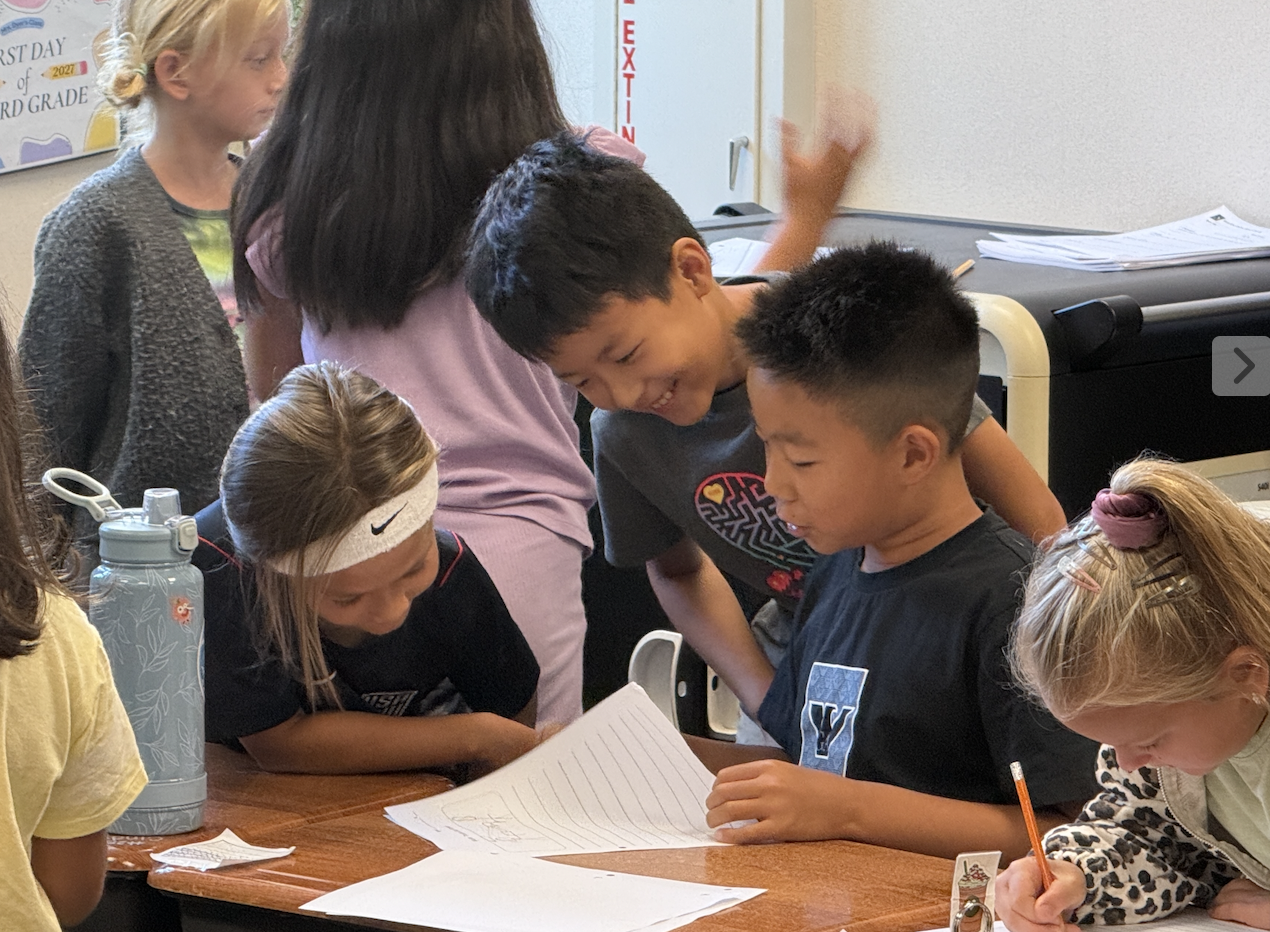
  5. Encourage participation and collaborative group learning. Children learn best when they are immersed in a topic and are allowed to discuss and advance with their peers.

  6. Encourage competency-based learning. Get kids excited about subject matter by explaining why it is important and how it will help them in the future. The goal should never be to get the "correct" answer, but to understand the topic at a fundamental, deep level, and to want to learn more.

CA Regions Maps

Students used their knowledge of California’s four main regions, as well as famous landmarks to create their own treasure maps. Maps included labels for landmarks such as Yosemite National Park, Redwood National Park, Mt. Shasta, Mt. Whitney, San Francisco, Sacramento, Santa Cruz, San Diego, Irvine, Los Angeles, Death Valley, Joshua Tree National Park, the Pacific Ocean, etc.

Students also drew in a compass rose with the cardinal and intermediate directions (north, south, east, west, NW, NE, SW, SE), and a treasure hunting trail throughout all of the regions and famous landmarks.

Barista of the Week

Each week, a student is selected to be our Barista of the Week. Baristas have special responsibilities throughout the week, and have opportunities to share their All About Me Google Slides, decorate a mini-poster, bring share items in, and invite (or record) a guest reader for our class! Click through the slides above to view directions when it is your child’s turn to share. New Baristas are selected on Friday afternoons.

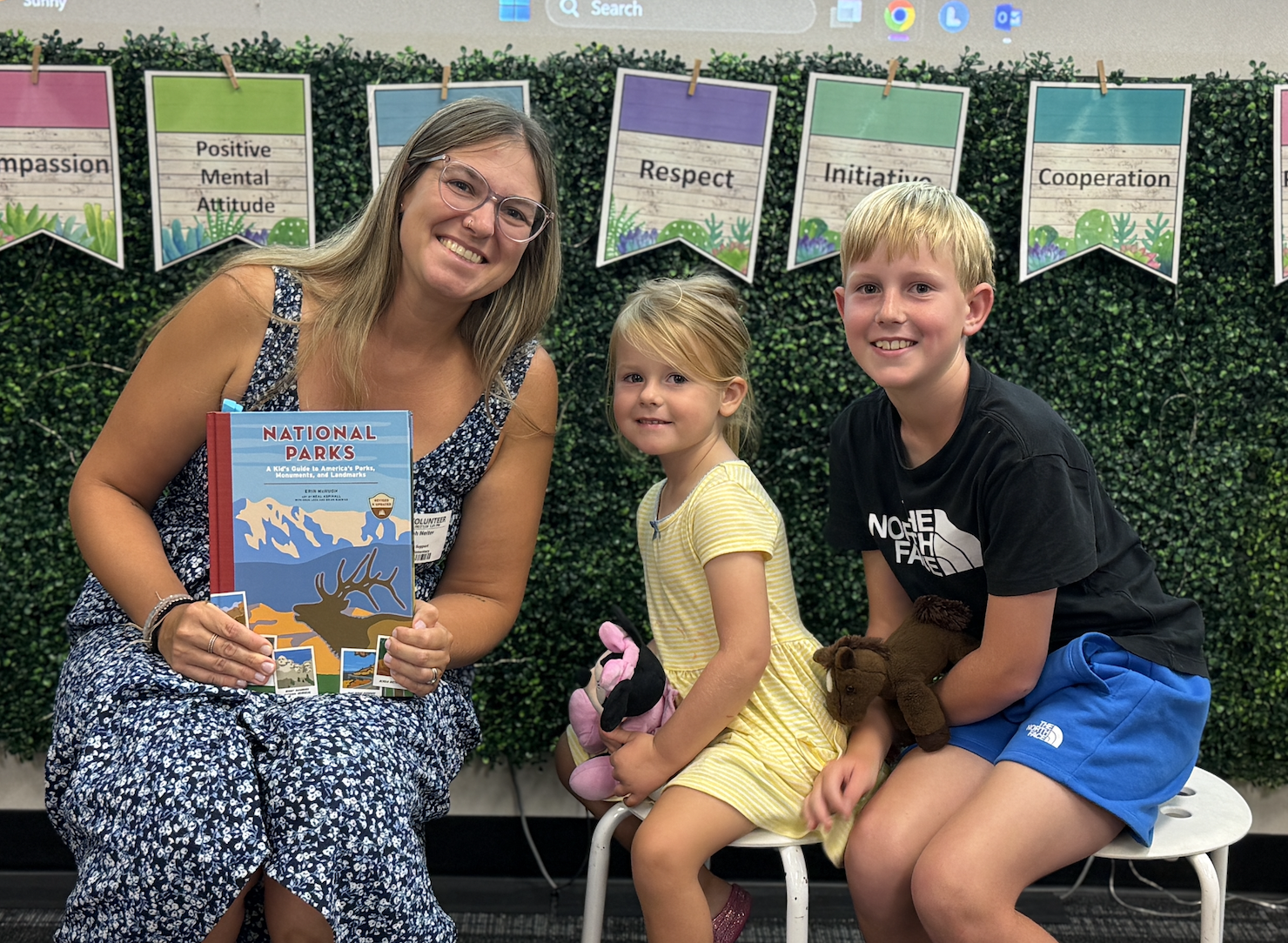
Below are pictures of our parent and family guest readers who have visited the classroom!

Third Grade Goals

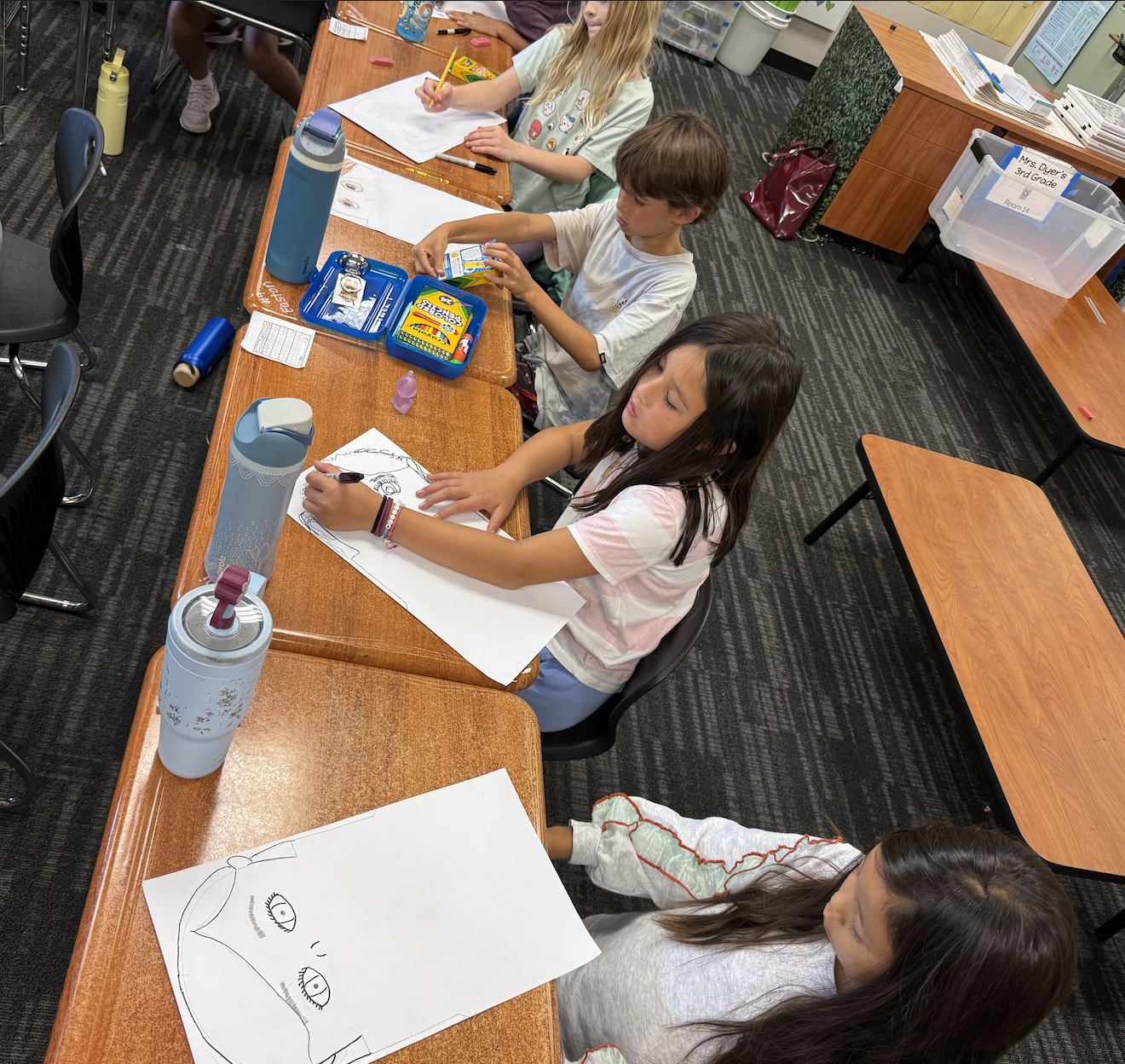
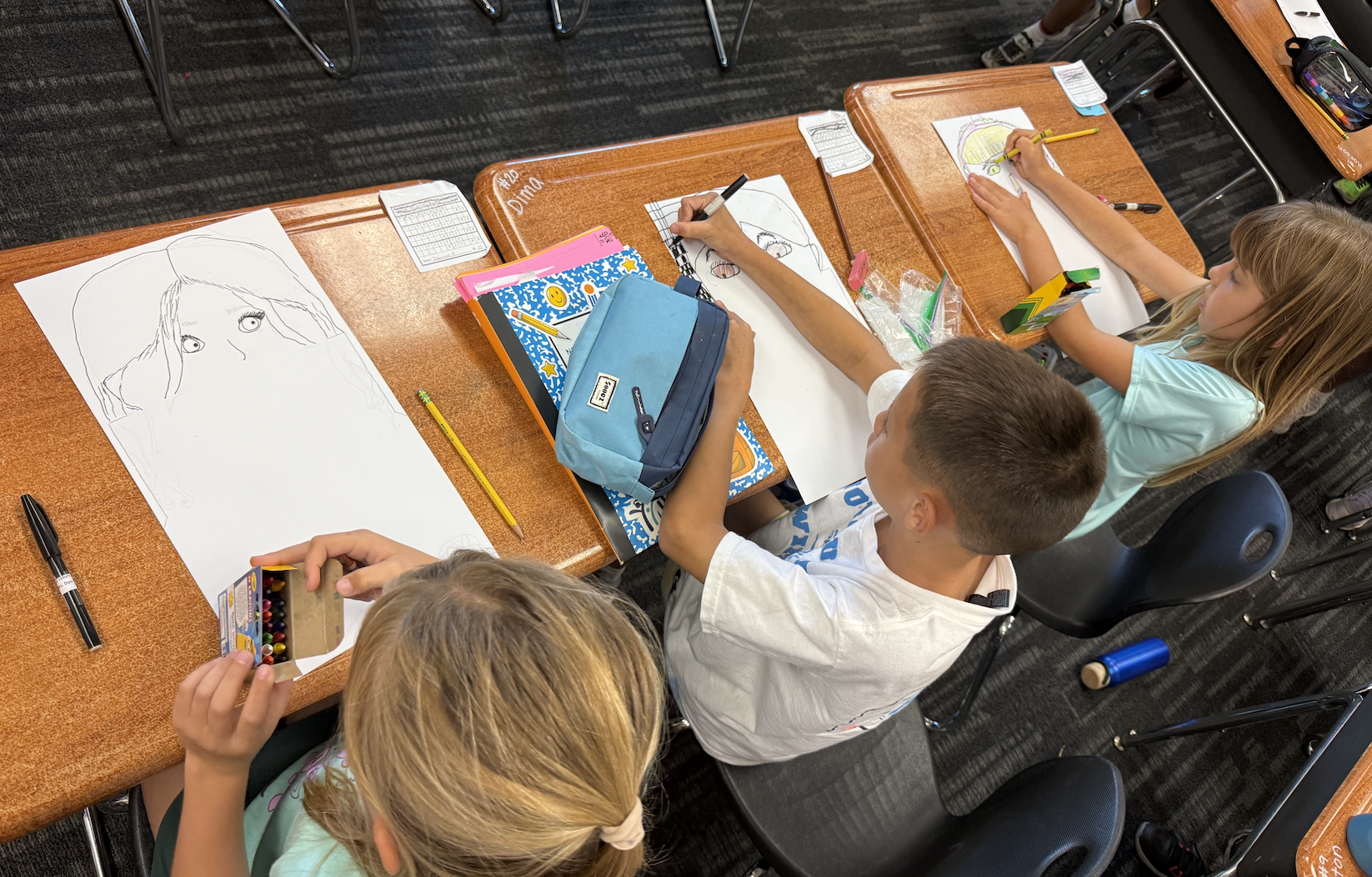
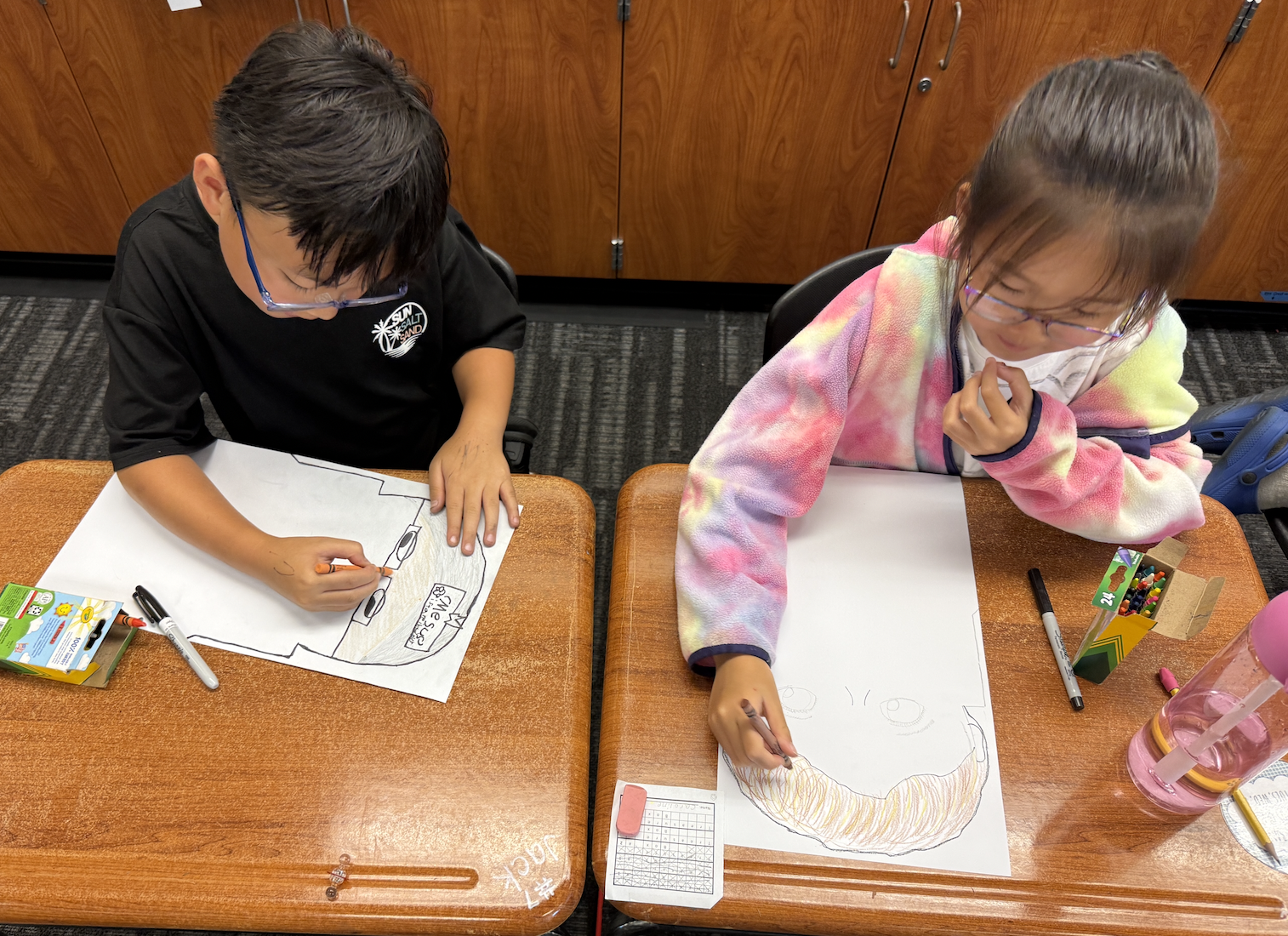
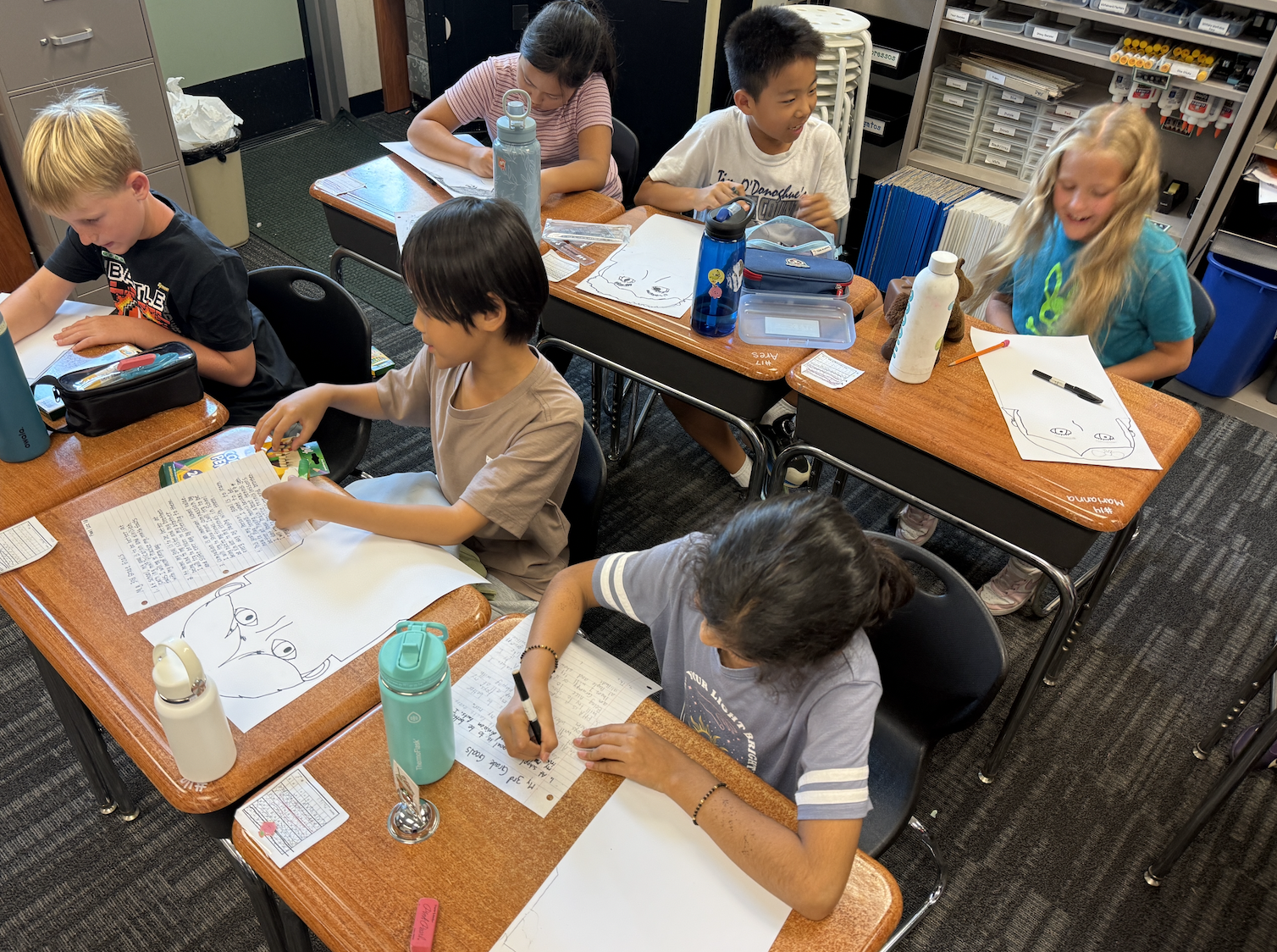
Students worked on their third grade goal portraits. These goals were shared during parent conferences. Every child thought of a goal to work on in the school setting, home setting, our school values, and a personal goal. 

Math Games

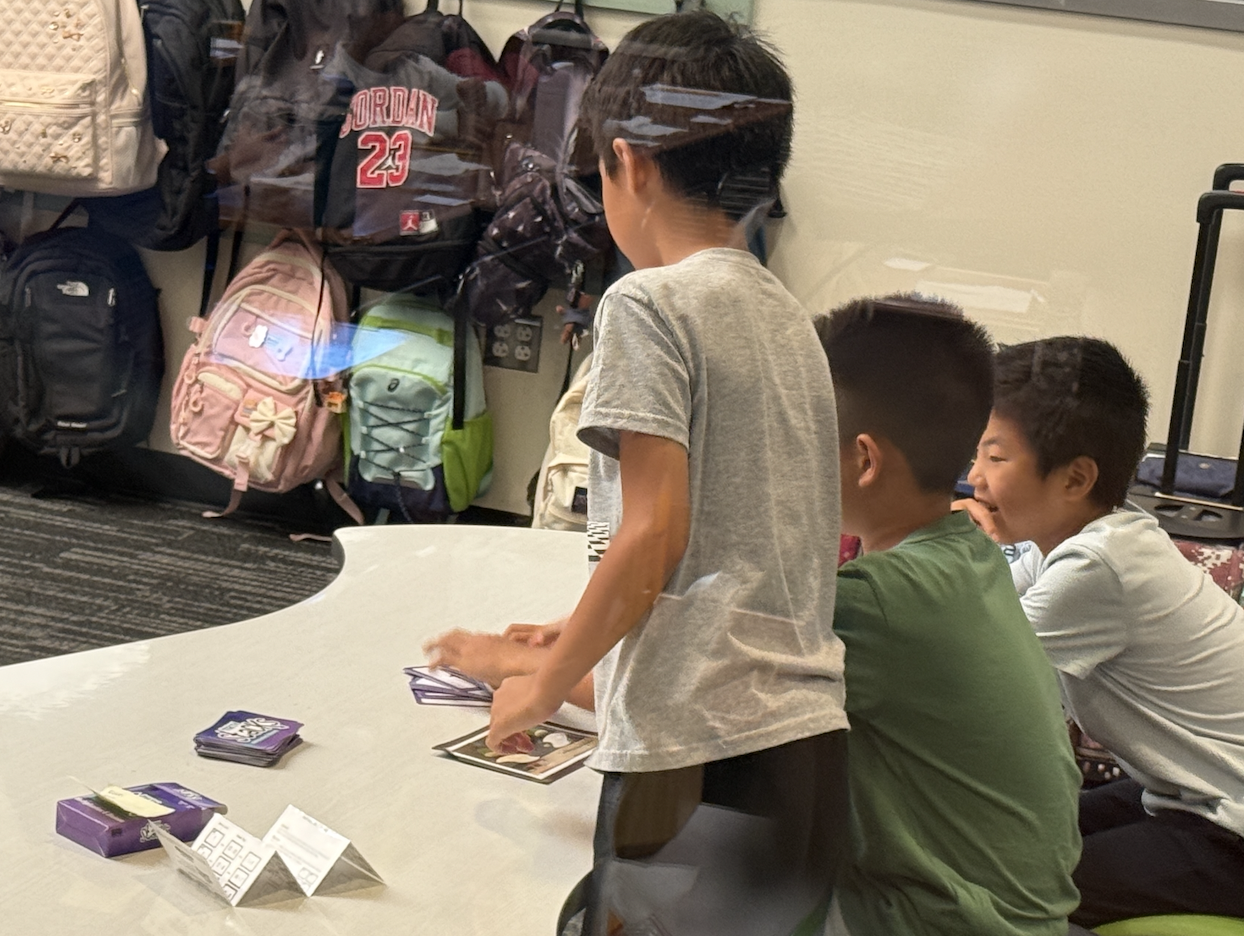
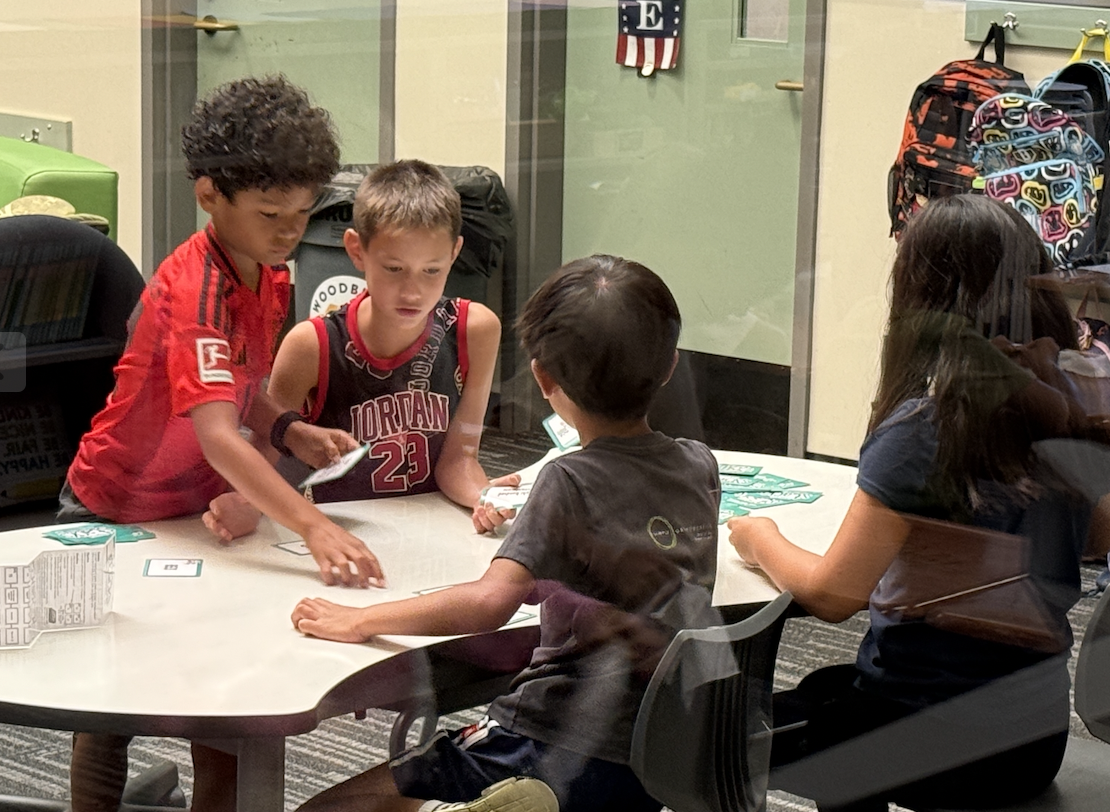
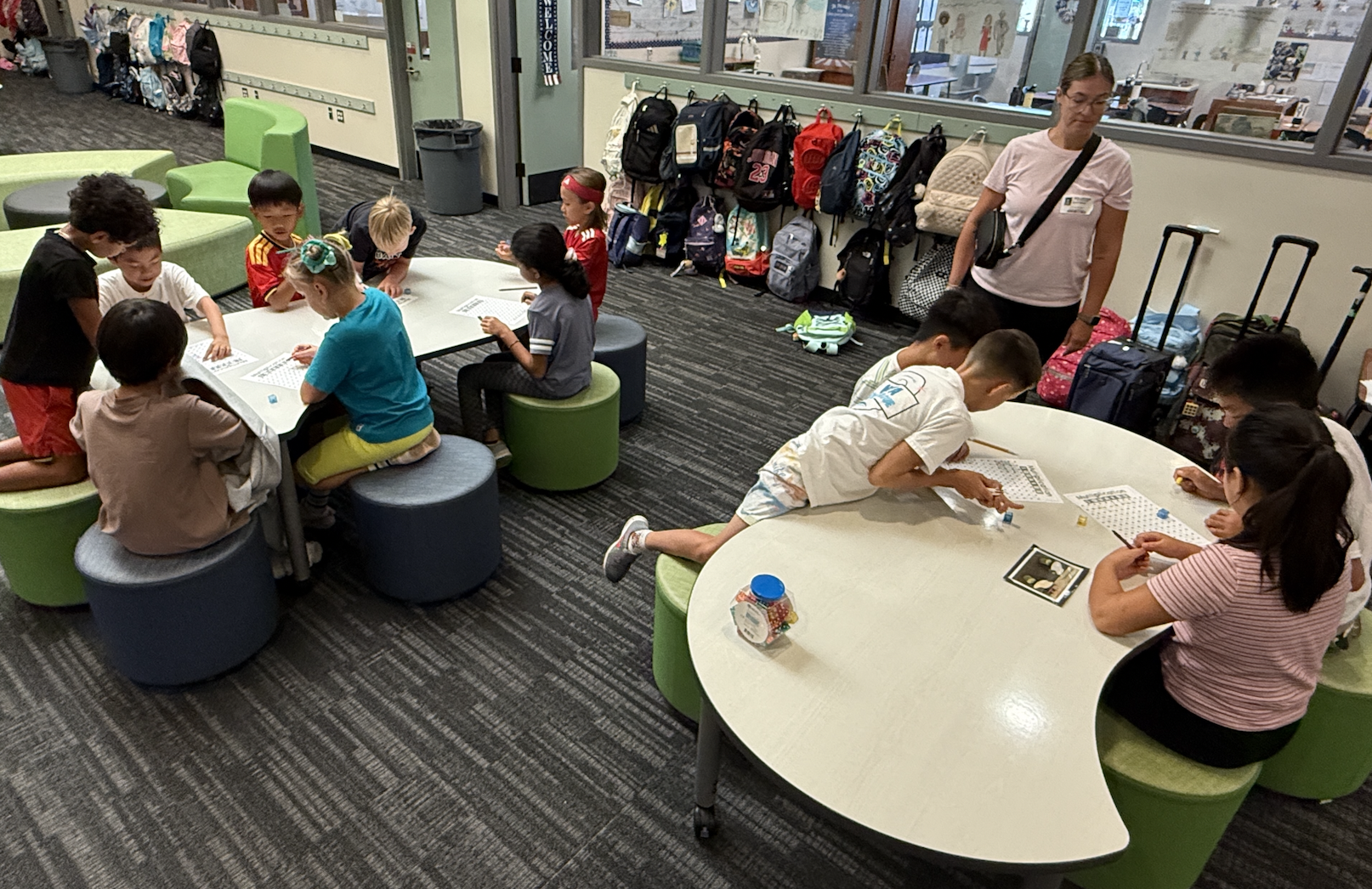
Thanks to parent donations, our class has access to games like Adsumudi — a mental math game, Sumoku— another math game, sets of Jenga blocks, and decks of cards that can be used to figure out equations utilizing addition and subtraction, and for some students— multiplication! In class, we played Addition and Subtraction War using standard decks of cards, which is a game that students could easily play at home if families have cards as well! We also played a multiplication game called Circles and Stars using simple dice. With the Jenga blocks, the kids got to know one another by answer questions corresponding to each block!

Writers Workshop

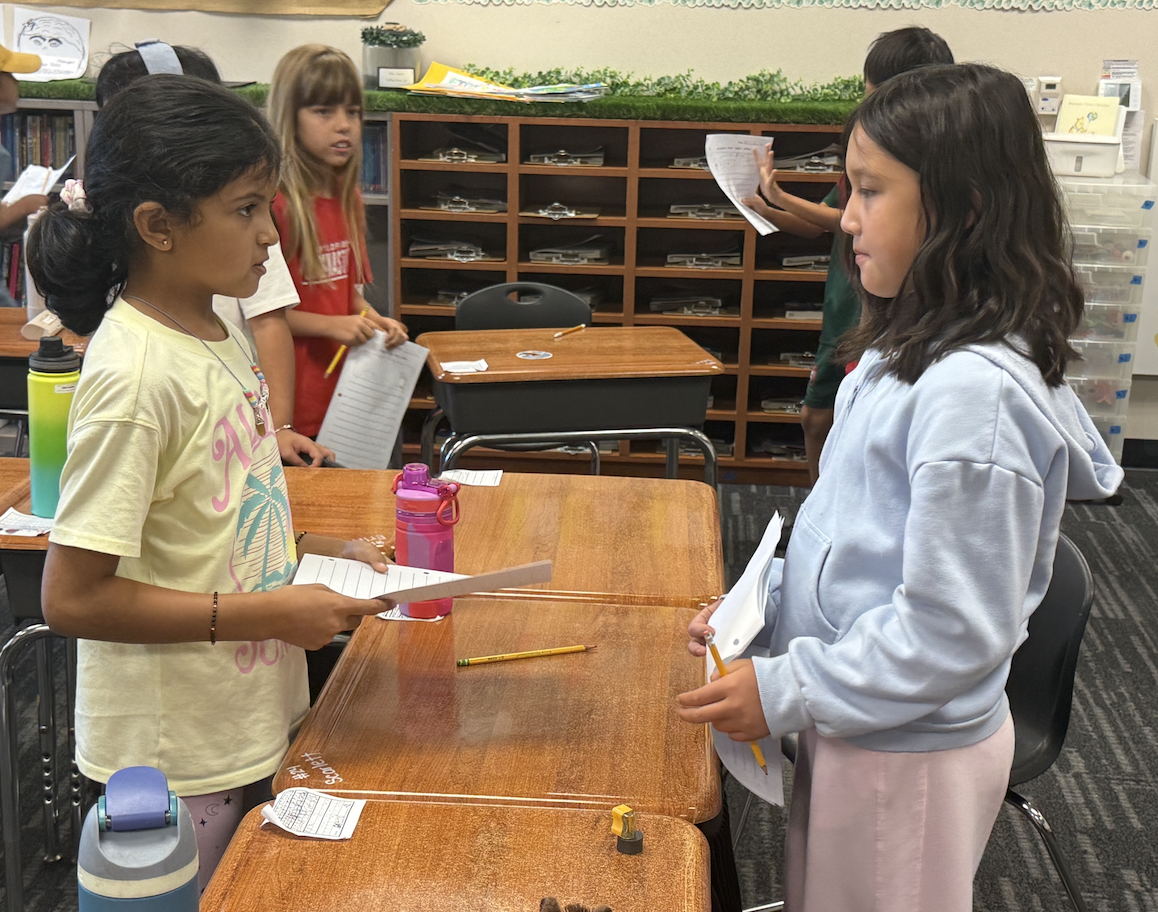
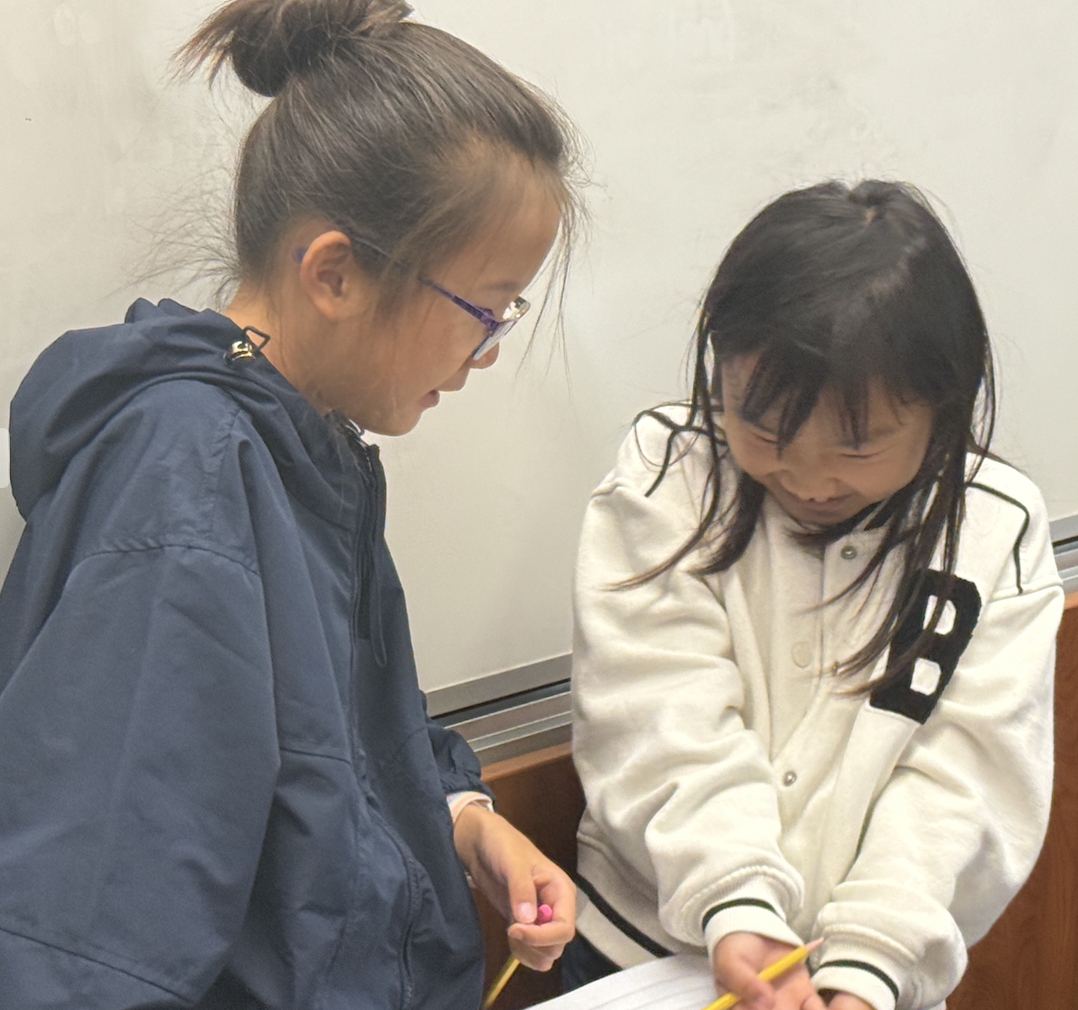
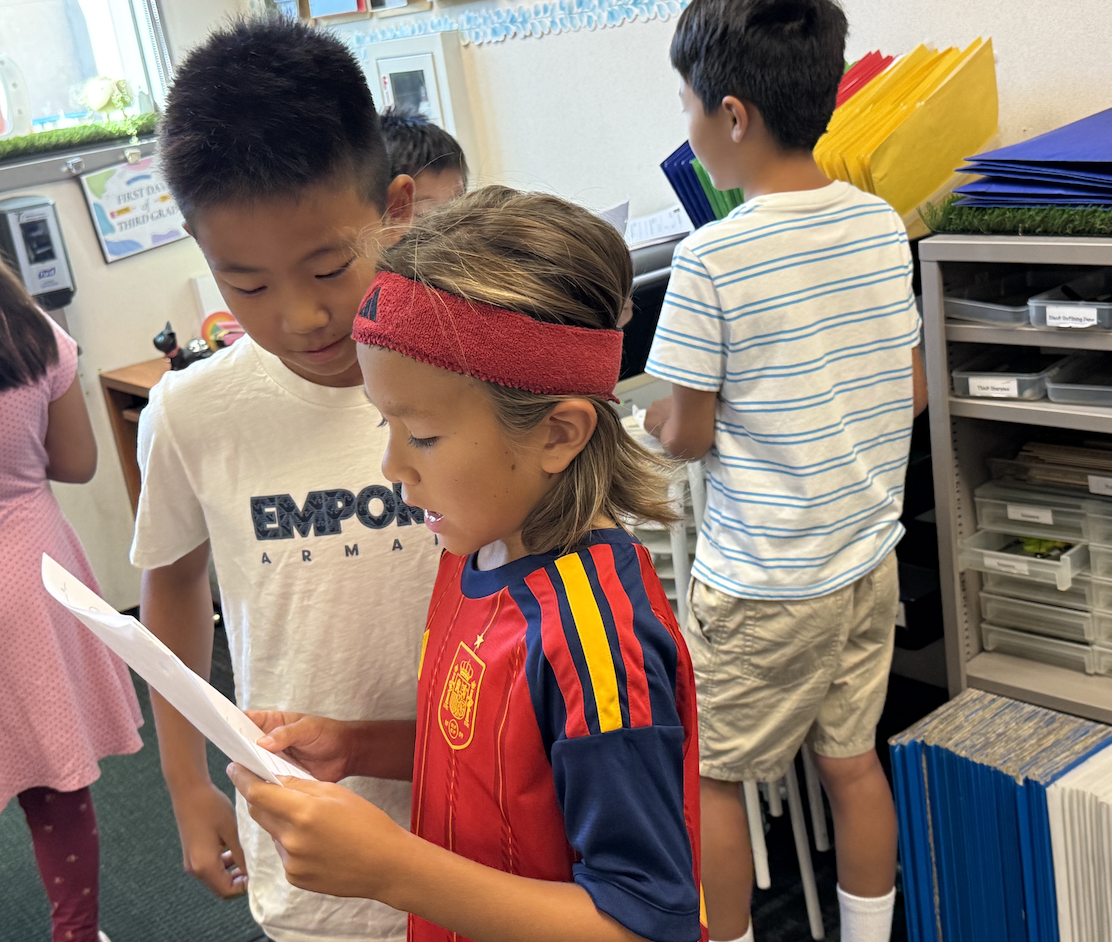
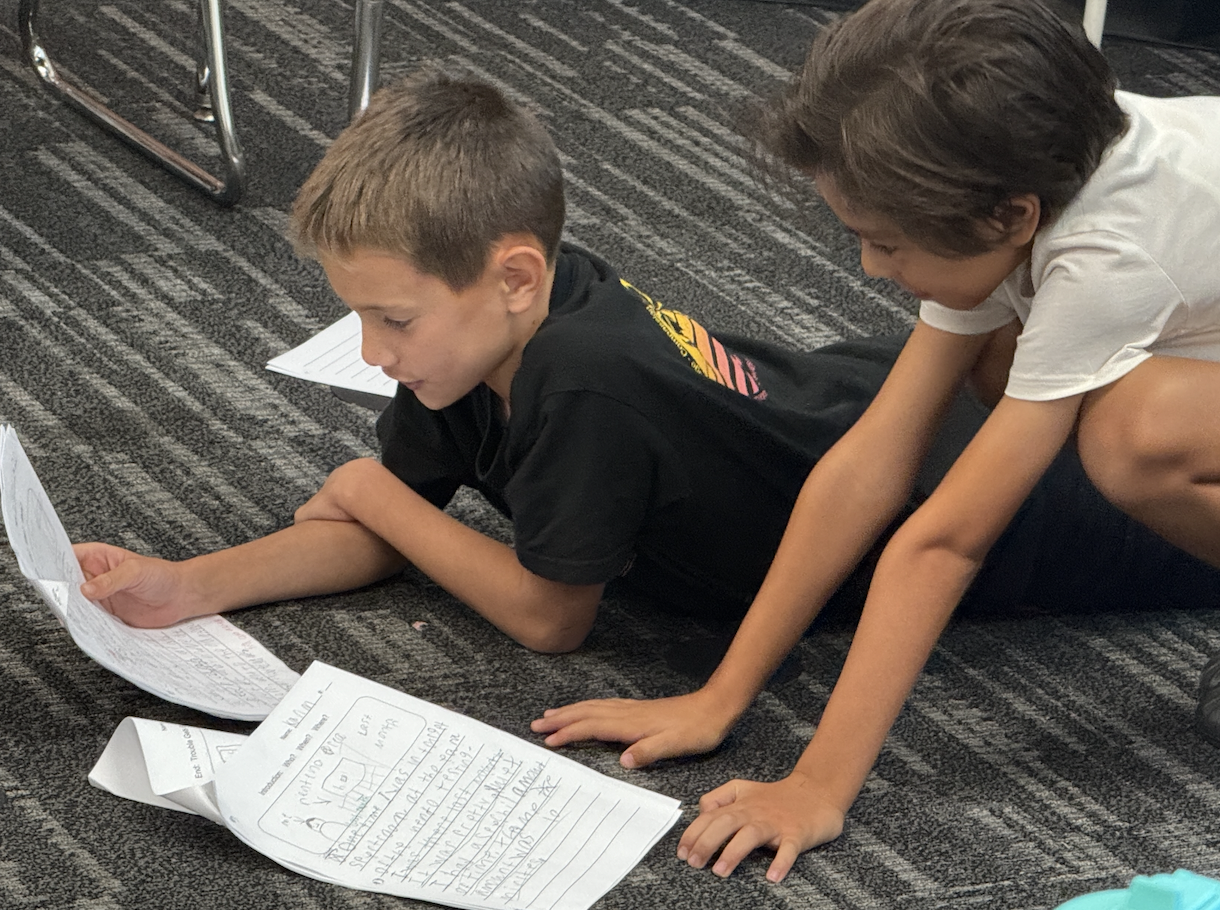
Students have been working hard on their Writers Workshop lessons. Throughout the school year, students will learn narratives, opinion, and informative styles of writing. We are currently learning the narrative genre, and it is so exciting to see and read the stories they are writing. Students also meet with writing partners to get advice and feedback on their writing so that they may edit and revise their work just like published authors! Thank you to the parents who donated the 4-color click pens! These are our special Writers Workshop pens that are only used during Writers Workshop!

California Regions

As part of our social studies unit, the students learned about the four main California regions- coast, valley, desert, and mountain. Students read through unit lessons, took notes, and are working to create beautiful flip books showcasing the four California regions.

Students should have all notes on the inside completed, then use the directed drawing video to draw each of the covers for the four regions. All pictures should be fully colored and fully outlined. Samples are below.